- Featured Stories, News
The Meaning of #NativeRISE
- Maria Ritter
Hau Mitakuyepi! Greetings, my relatives!
I have been a part of the Twin Cities urban Indigenous community for nearly my whole life. As a child, I was on the scene while my mother worked at the Minneapolis American Indian Center, as well as when I joined my extended family hitting the trail during Pow-Wow season across the five state area. For the past twenty years, I have had the pleasure of serving the community through my various roles working here at the American Indian OIC. It has truly been a blessing to be able to give the very best of my talents on behalf of our people, and for this I will forever remain grateful.
Over the course of these many years, I have had several opportunities to either support or participate in events meant to uplift local Indigenous nonprofits and the community. During my younger years, what always struck me (and my family) as curious were the more negative connotations seemingly linked to our people – often used in the very titles for these events. “Healing the Circle”, “Fallen Arrows”, “Trail of Broken Treaties”, “Fixing the Broken Hoop”, etc., are just some of the examples of wordplay used by our predecessors to raise awareness about the needs of our people. At the time it made sense. The challenges and disparities were manifold. Those that could help often didn’t as their understanding about Native Americans, and by extension the historical occurrences that created the disparities in the first place, were staggeringly limited. This was due to the systemic invisiblization of our people, whereby our issues and challenges were seldom taught to non-Natives and almost never discussed in public. In this environment, evoking our plight could be an effective tool to awaken people to a different point of view. But even as a young person, I felt that the true value of the community, our amazing capacity to help one another (as modeled by the work of my own mom) or the very real successes that were being achieved by our people, were too often overlooked or outright ignored. To me, the wrong impression was being made.
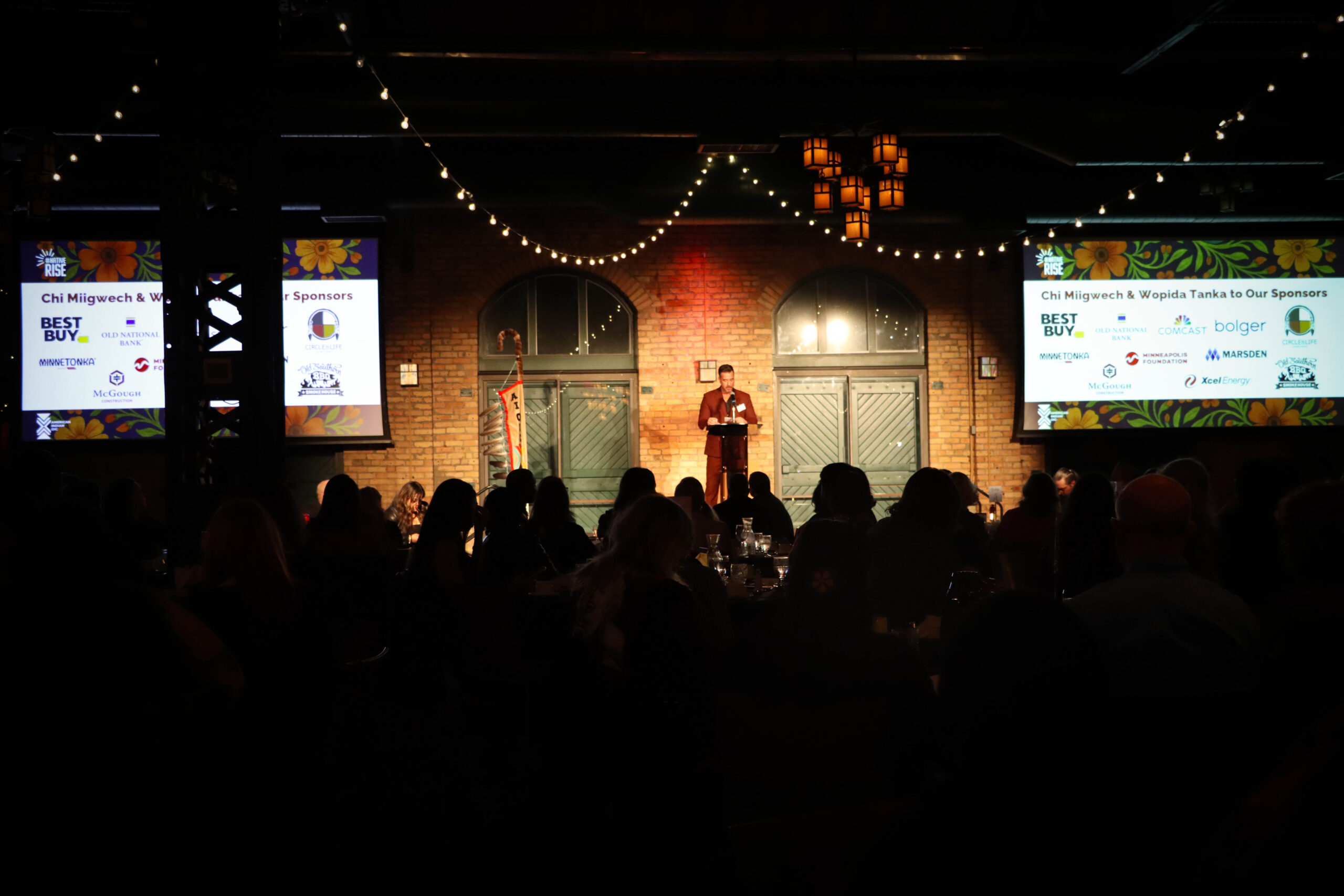
Fast forward to the year 2016, when the American Indian OIC hosted its second ever public gala. By that time, I had been working at the organization for ten years and had been serving as President and CEO for two. When it came time to plan this particular event, which was designed to reintroduce the urban Indigenous community to key stakeholders from across Minnesota, I remembered all of those past events and how our problems almost always were thrust before the audience as the central focus of the evening – and how this was typified by the chosen title. It was then that I decided that we should change things up.
What was most important from my perspective was to reinforce all of the amazing work being put forward on a daily basis by our incredible team at the AIOIC, and by many of our colleagues in the wider community. I felt it important not only to honor their talents and efforts, but to celebrate the achievement of the clients and students who have propelled themselves to greater heights as a result of our programs. Yes, there remained many a persistent challenge confronting our community, but what was also equally true was that
our people possess enormous capacity to improve our own lives and to empower one another to thrive. We had all the talent and drive that we could possibly need to change our lives – and our world – for the better. What we lacked were the appropriate amount of resources to make this manifest in a consistent manner. This became the central concept for our collective gathering, the AIOIC gala, to show everyone that we are steadily improving ourselves, our community, and even the wider world through our work. For decades we have been “on the come up” as the youth would say. We are not a group of people to be pitied. We are not a community in need of some outside benefactor to come to our rescue or to save us.
We are powerful.
We are talented.
We are well able and completely committed to uplifting our own.
With each passing year, we are steadily rising to new and better heights.
What we need is the “fuel” (read: resources) to continue on with, and ideally expand, this forward momentum so that our community’s ascension can be achieved at an even quicker clip. This is were the allies and partners of the American Indian OIC can lend their support. Working in concert with one another, we will be better able to access and deploy these necessary resources made available through these partnerships. In so doing, it will serve to accelerate our community’s collective accomplishments. In this respect, the donor, the corporate sponsor, the foundation grant officer, the teacher, the case manager, the counselor, the department director, and the CEO all pull together on behalf of the people so that they reach even greater heights. When we come together in this fashion, our collaborative power helps our community successfully transcend the challenges that have for too long maligned outsiders impressions of Native Americans.
With this in mind, we at the American Indian OIC made the conscious decision to embed these sentiments directly into our annual gala. In 2016, #NativeRISE was born. As we continue to work together, our community will continue its rise.
We are now ten years down this road, and I would like to personally invite all of you to join us in this amazing effort. Come be a part of an historic crusade that builds on the incredible work put forward by those who have come before us. Come and add your gifts to this extraordinary legacy and help our people to achieve even further heights of success and happiness. Join us and become one with the solution.
Join us at #NativeRISE 2026.
I promise you that the feelings of joy that comes from experiencing shared success are both intoxicating, and incomparable to much of anything else.
I look forward to seeing you all there.
Wopila Tanka (A “great thank you” in Lakota).
Joe Hobot, Ed.D.
Sunkmanitu Tanka Se Tokeya Hiyaye (He Leads Like A Wolf)
Descendant of the Hunkpapa Band of the Oceti Sakowin and Standing Rock Sioux Tribe
President and CEO
American Indian OIC

After losing her son, Christine turned her grief into advocacy and worked to create change for others. With support from American Indian OIC, she rebuilt her confidence, found meaningful work, and continues to make a difference by helping others through difficult times.
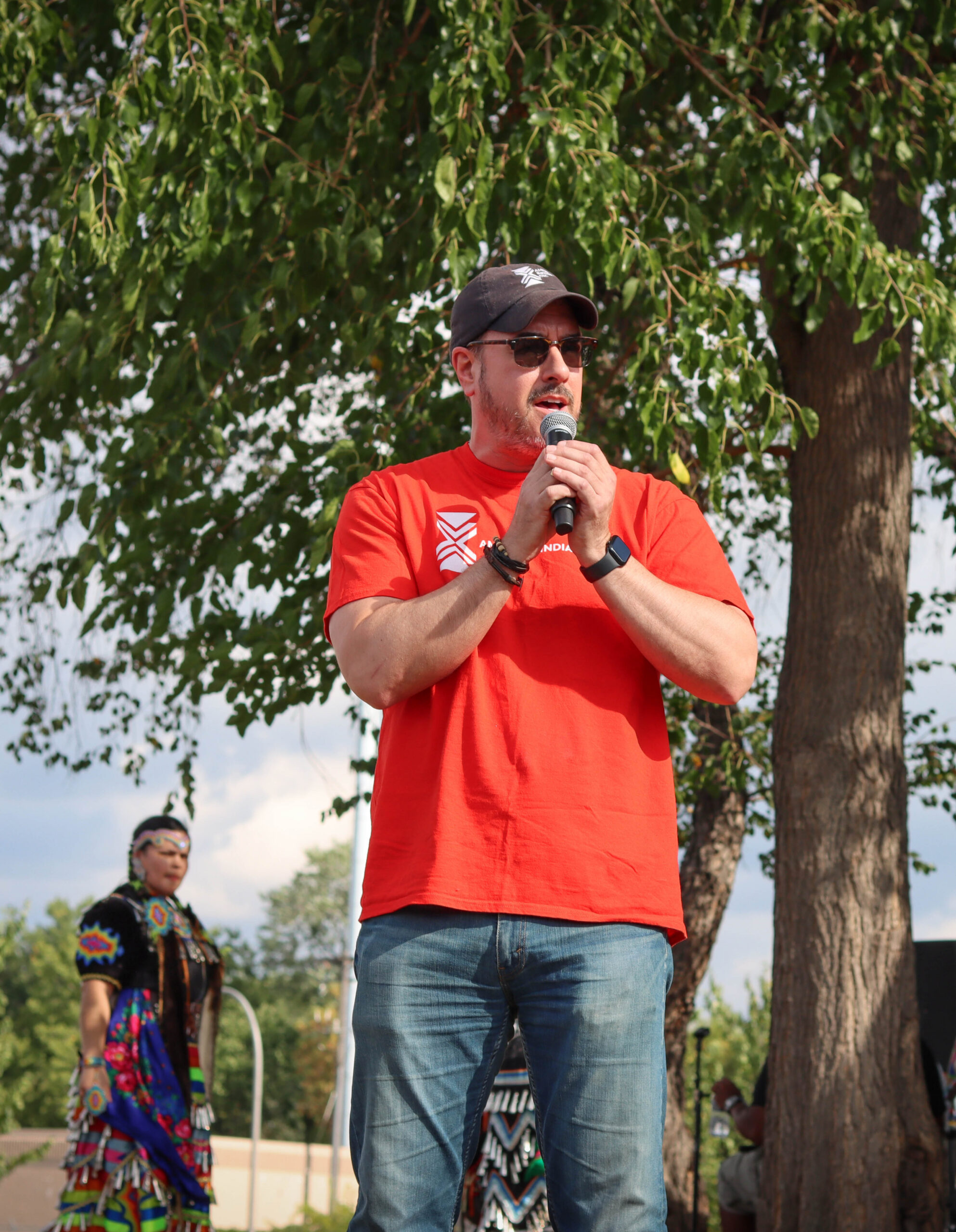
This month, we proudly celebrate Dr. Joe Hobot, President and CEO of American Indian OIC, as he marks 20 years of dedicated service to our organization and community. From his beginnings as a classroom teacher to leading AIOIC’s continued growth, Joe has helped expand educational opportunities, strengthen our organization, and advance our mission of serving the urban Indigenous community.
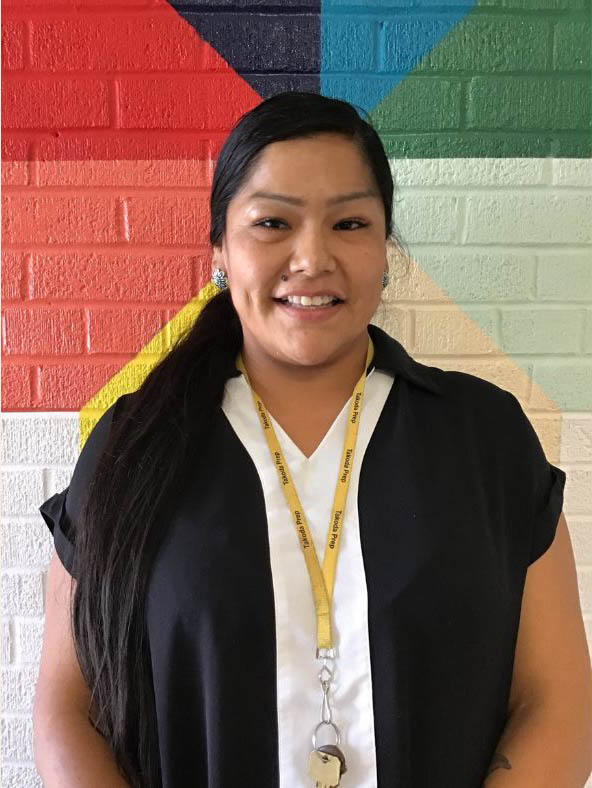
Kyla’s journey is shaped by resilience, determination, and a passion for helping others. As a Youth Career Counselor at American Indian OIC, she is dedicated to empowering participants and connecting them with opportunities to achieve their goals.